
Cladding remediation works in Belfast
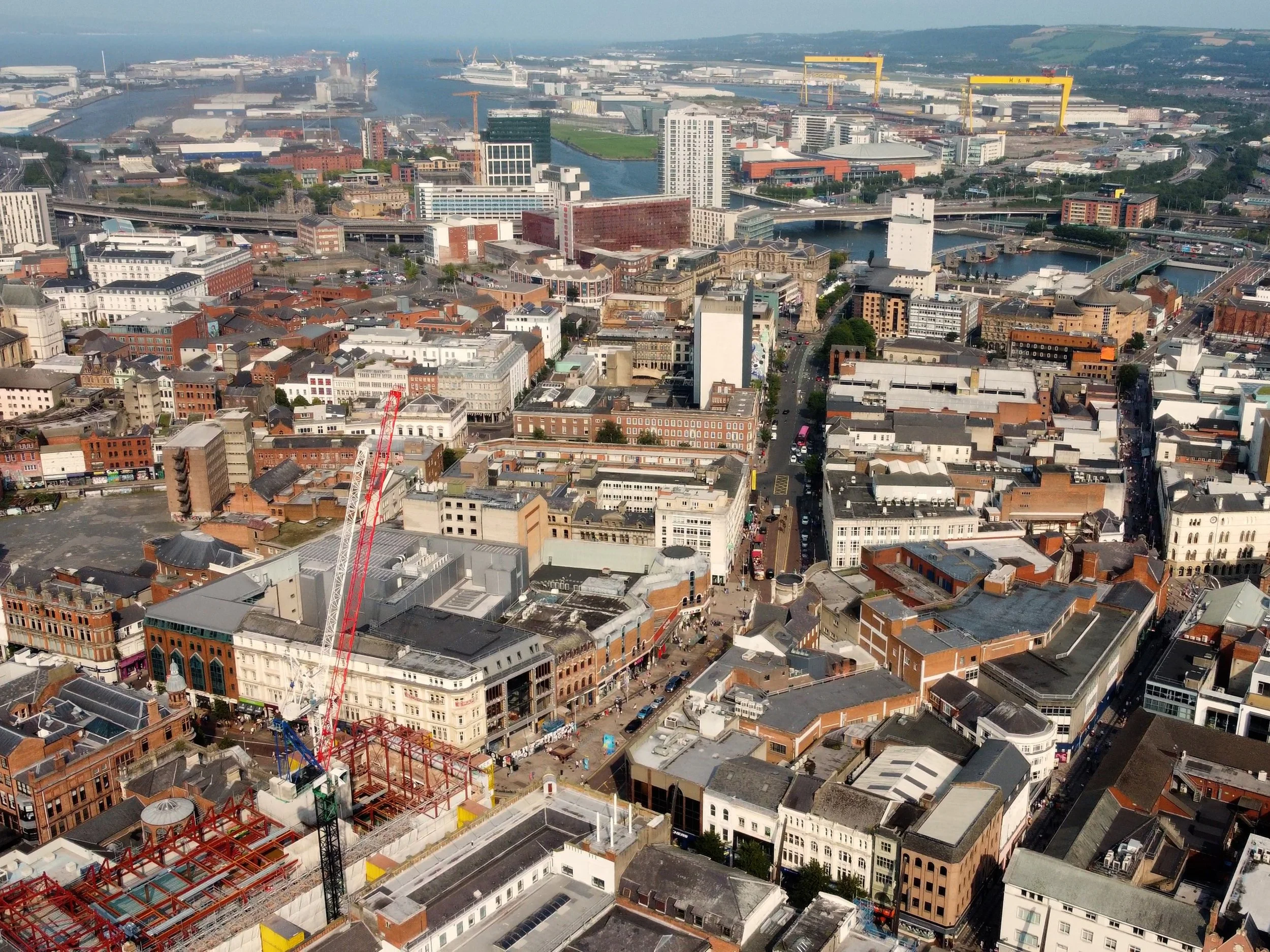
Image: Aerial photo of Belfast city skyline
Why cladding remediation was needed and how we have supported homeowners.
Cladding remediation works in Belfast are currently underway at two of our developments after external wall assessments raised fire safety concerns.
Since the Grenfell Tower fire, building safety and the use of combustible cladding has come under much closer scrutiny across the UK. As a result, Fire Risk Appraisals of External Wall Construction (FRAEWs) have become an important part of assessing fire risk in residential buildings. In some cases, an EWS1 form may also be required to support valuation, sale or re-mortgage. These assessments help building owners identify whether remedial works are required and can support applications for funding through schemes such as the Cladding Safety Scheme (CSS).
We spoke to Max Alexander, Client Relationship Manager in our Belfast office, who is working with homeowners and specialist project managers on the cladding remedial works at these two developments.
Why were these cladding works needed?
The works were required after external wall assessments identified that the existing cladding systems presented fire safety risks that required remediation. In response to the findings, remediation works were needed to improve building safety and support compliance with current building safety guidance.
What is EWS1?
EWS1 stands for External Wall System 1. It is a form used by qualified professionals to record their assessment of a building’s external wall system. The EWS1 process was introduced by the Royal Institution of Chartered Surveyors to support the valuation, sale and re-mortgage of flats. While it is not legislation, it is widely used by valuers and lenders.
When is cladding remediation needed?
Cladding remediation may be required when an external wall assessment identifies fire safety risks associated with the external wall system that need to be addressed to improve building safety.
How was the programme of works established?
The programme of works was established through detailed surveys and inspections carried out by specialist consultants, followed by the development of a structured plan of works. This involved prioritising key risk areas, aligning contractor availability, and ensuring works could be delivered in a logical and efficient sequence while minimising disruption to residents.
How were the specialist contractors and consultants chosen?
Specialist contractors and consultants were sourced based on their experience with cladding remediation projects of a similar scale and complexity. A thorough selection process was undertaken to ensure all appointed parties had the necessary expertise, accreditations, and capacity to deliver the works safely and effectively in line with regulatory requirements.
Were there any challenges in this project and how did you overcome them?
There have been a few challenges throughout the project, particularly when opening up areas of cladding and uncovering previously unknown issues. These included design and construction issues that required review and further remedial solutions. We have worked closely with the design team and contractors to address these matters as they arise, ensuring solutions are implemented promptly and works can continue progressing.
How have you kept homeowners updated on the progress?
Homeowners have been kept regularly informed through ongoing communications, including updates on progress, key milestones, and any issues identified on site as works have progressed.
What feedback have you had from homeowners about the process?
Feedback from homeowners has been really positive. Residents and directors have noted that the project is progressing well, with good momentum on site, and they are satisfied with the current pace of works. They also appreciate that any issues identified are being promptly assessed, with plans put in place quickly to resolve them.
Cladding remediation is a complex but essential part of improving building safety, and external wall assessments help identify where work is needed. Projects like these are complex but essential and involve close coordination between contractors, consultants, and stakeholders at every stage. Max and the team have taken a structured and proactive management approach and have worked hard to keep homeowners informed every step of the way. At Charles White, our staff stay up to date with the latest guidance and legislation which helps ensure that developments not only meet today’s safety requirements but also provide reassurance and long-term confidence for residents.
About Charles White Limited
Based in Belfast and working across Northern Ireland, Charles White Limited is a well-respected and trusted block management company. From everyday tasks such as grounds maintenance to the full management of complex residential developments, we take a proactive, people-focused approach. We work hard to ensure our clients always feel informed through regular, clear communication and our commitment to transparent financial management.