
What does a Client Relationship Manager do?
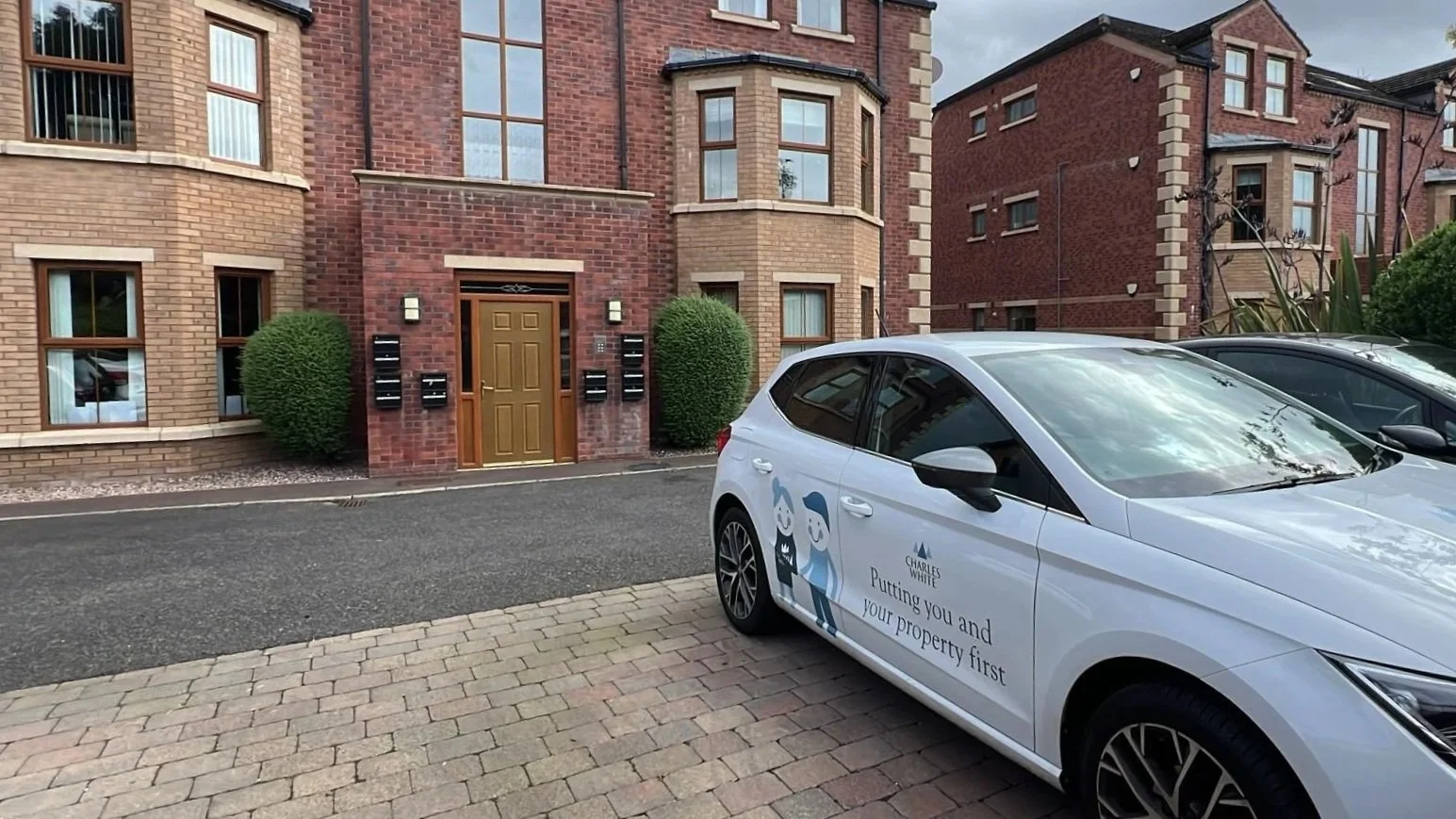
Image: Charles White car outside a managed development in Northern Ireland.
Read how our Client Relationship Managers work with their clients to keep properties safe and well maintained.
In residential property management, the Client Relationship Manager plays an important role, keeping developments safe, well maintained, financially sustainable and legally compliant. At Charles White, all our developments have a dedicated Client Relationship Manager who supports the Management Company and shareholders. They:
Are the key point of contact and prioritise establishing good working relationships with homeowners and directors
Respond to calls and emails
Visit clients on site
Carry out regular site visits to check the condition of the internal and external common areas
Identify any maintenance issues that need attention
Attend AGMs and directors’ meetings
Liaise with trusted contractors
Provide regular updates
We spoke to Curtis Donnan, Client Relationship Manager in our Belfast office, about what the role involves and why trust, transparency and regular communication are so important to successful block management.
Can you explain what a Client Relationship Manager does in residential property management?
A Client Relationship Manager acts as the main point of contact between the Management Company, shareholders, and the property management team. My role is to ensure developments are well maintained, financially managed and compliant with their legal obligations. I work closely with directors, homeowners and contractors to coordinate repairs, oversee service delivery, manage budgets and help resolve issues that arise within a development. Ultimately, my job is to make sure the Management Company has the support it needs to make informed decisions and to protect the long-term interests of homeowners.
How do you support the Management Company in your managed developments?
I provide day-to-day guidance and practical support to Management Company directors, many of whom are volunteers giving up their time to help their development. This includes organising meetings, preparing reports and budgets, obtaining quotations, managing contractors, assisting with compliance requirements and providing advice on issues such as maintenance responsibilities, insurance matters and lease obligations. I aim to make the directors’ role easier by providing clear information and helping them turn decisions into actions.
How do you help the Management Company set budgets, plan repairs and maintenance for their development?
A good budget starts with understanding the development's needs. I review previous expenditure, assess ongoing contracts and identify future maintenance requirements. Where appropriate, I commission surveys or inspections to help identify longer-term repair needs and prioritise works. From there, I work with directors to develop realistic budgets that balance affordability with the need to properly maintain the property. Planning ahead helps avoid unexpected costs and ensures developments remain safe and financially sustainable.
What does good communication look like between a property management company and homeowners?
Good communication is clear, honest and consistent. Shareholders should understand what is happening in their development, why decisions are being made and how their service charges are being spent. It's important that communications are straightforward and avoid unnecessary jargon. Good communication also involves listening, responding promptly, and making sure homeowners feel their concerns have been heard and considered.
How do you make sure homeowners are kept informed about ongoing works or decisions affecting their development?
I use a combination of newsletters, email updates, AGM communications, notices and direct correspondence to keep homeowners informed. The key is to communicate at appropriate stages of a project, particularly when there are delays, changes to timelines or important decisions that may affect residents. Even when there is little progress to report, providing updates helps reassure homeowners that matters are being actively managed and not forgotten.
How does trust and transparency shape the way you work with homeowners?
Trust is built through honesty and consistency. I believe shareholders appreciate straightforward explanations, even when the answer is not always what they hoped to hear. Being transparent about costs, decision-making processes, delays and limitations helps create realistic expectations and stronger working relationships. When homeowners understand why decisions are being taken, they are more likely to have confidence in both the Management Company and the managing agent.
Can you share an example of how a proactive client relationship management has helped improve a development?
My current ongoing project in Holywood is a good example. I am in the middle of organising a large external building project where a series of repairs and cosmetic works will be done to the three apartment buildings. A levy will be required from each shareholder for this, so, in order for them to have faith in the project I have provided clear communication along the way. This involved making them aware at the AGM a project was upcoming, and a subsequent EGM would be held to discuss this when we had more information. I also have met with the directors to discuss this project and met with the surveying company too who have done the reports. The EGM was held in July 2026 and I made a clear presentation about the different aspects of the project and received overwhelming support.
What advice would you give to homeowners who want to get the best from their property management company?
Get involved and stay informed. Read the communications you receive, attend meetings where possible and ask questions if something is unclear. Property management works best when there is a positive partnership between shareholders, directors and the managing agent. Being engaged, reporting issues early and understanding the responsibilities of both homeowners and the Management Company helps everyone work towards the same goal: maintaining a well-run, well-presented development that retains its value over the long term.
From setting realistic service charge budgets to planning maintenance projects and keeping homeowners updated, effective client relationship management is central to a well-run residential development. Curtis’ experience shows how clear communication, practical support and long-term planning can help Management Companies make good decisions that benefit all shareholders.
About Charles White (NI) Limited
Based in Belfast and working across Northern Ireland, Charles White (NI) Limited is a well-respected and trusted block management company. From everyday tasks such as grounds maintenance to the full management of complex residential developments, we take a proactive, people-focused approach. We work hard to ensure our clients always feel informed through regular, clear communication and our commitment to transparent financial management.